Q&A: Other Architects
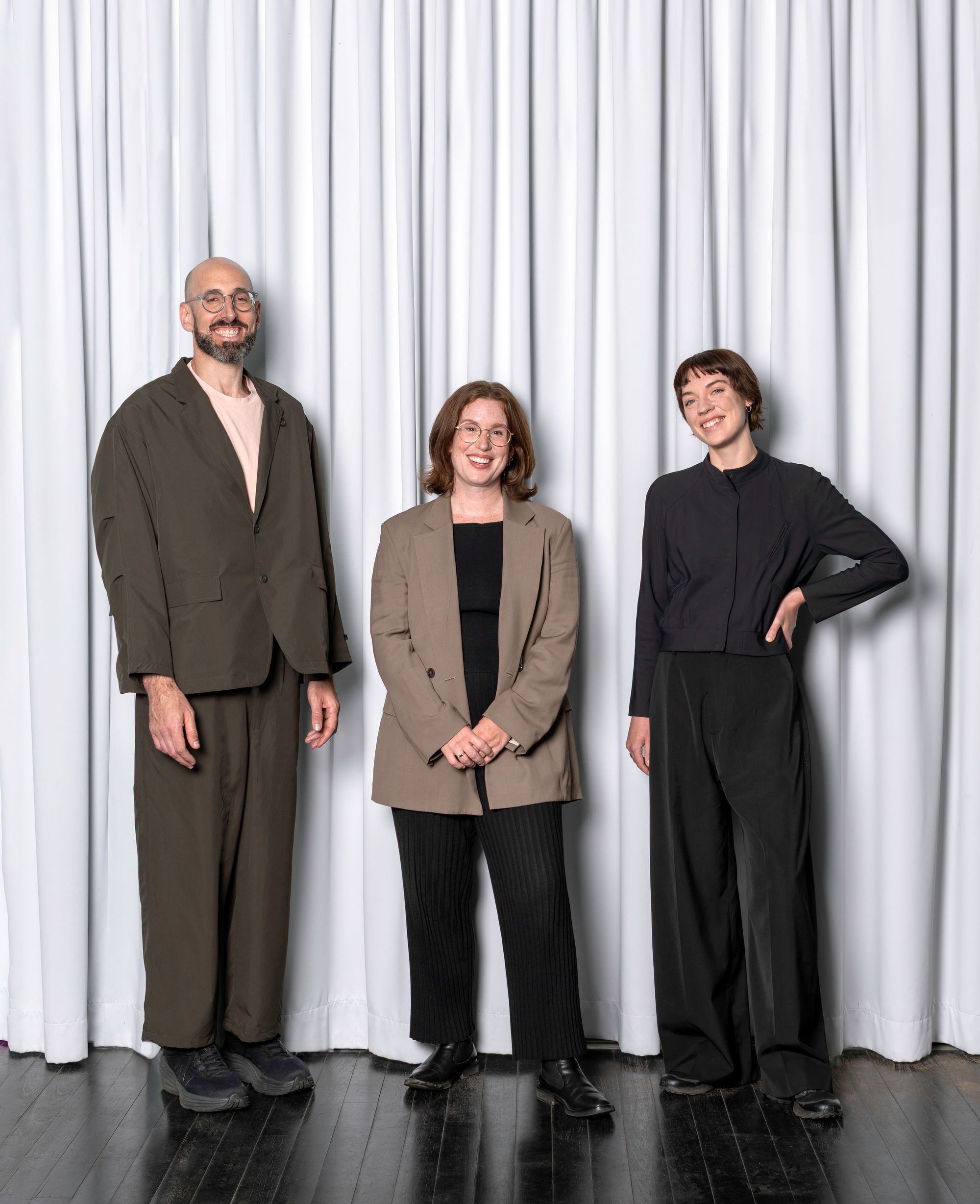


How did the collaboration between Other Architects and Otetto come about?
David: We’d already been thinking about modular and prefabricated housing for a few years, particularly through work we did with the Government Architect NSW office on temporary housing following the floods. That experience really shifted our thinking. Suddenly the focus was on how small improvements could be multiplied across many homes to create real impact.
Around the same time, we came across Otetto. What struck us immediately was the clarity of Otetto’s proposition – beautiful, architecturally designed homes with a strong environmental agenda.
But we also noticed a gap. The existing designs were quite substantial in size, and we felt there was an opportunity to bring that same level of design quality to something more compact and accessible, suited to smaller sites and more modest budgets. So we reached out, started a conversation, and over time it evolved into a genuine collaboration.
What makes Lomandra different from other prefab or project homes?
Smaller prefab homes can sometimes feel like what’s leftover once planning controls, setbacks and site constraints have done their work. You can end up with a house that’s been squeezed into a site.
With Lomandra, we’ve tried to reverse that. The house is carefully designed to create relationships with its surroundings, by carving out courtyards, bringing in light and air and making a compact footprint feel generous and connected to landscape, even on a suburban block.
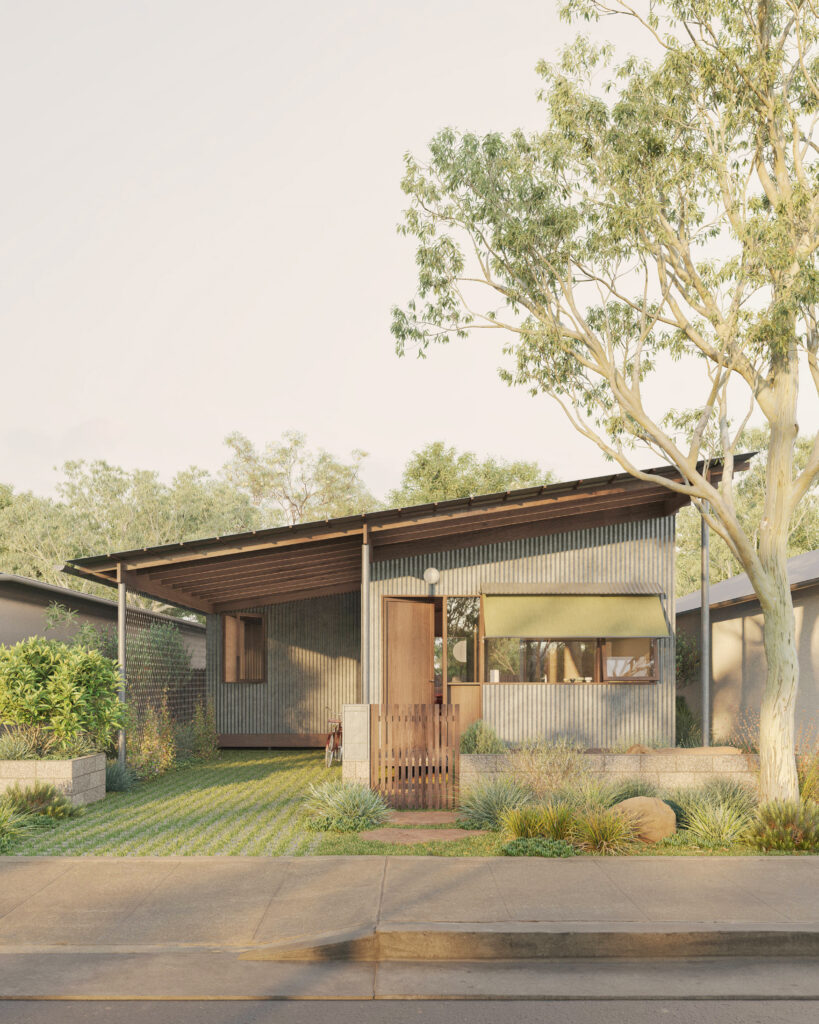
The home is relatively compact. How did you approach designing ‘smaller’ without compromising?
That was central to the brief. We didn’t want it to feel like a scaled-down version of something bigger – we wanted it to feel complete in its own right.
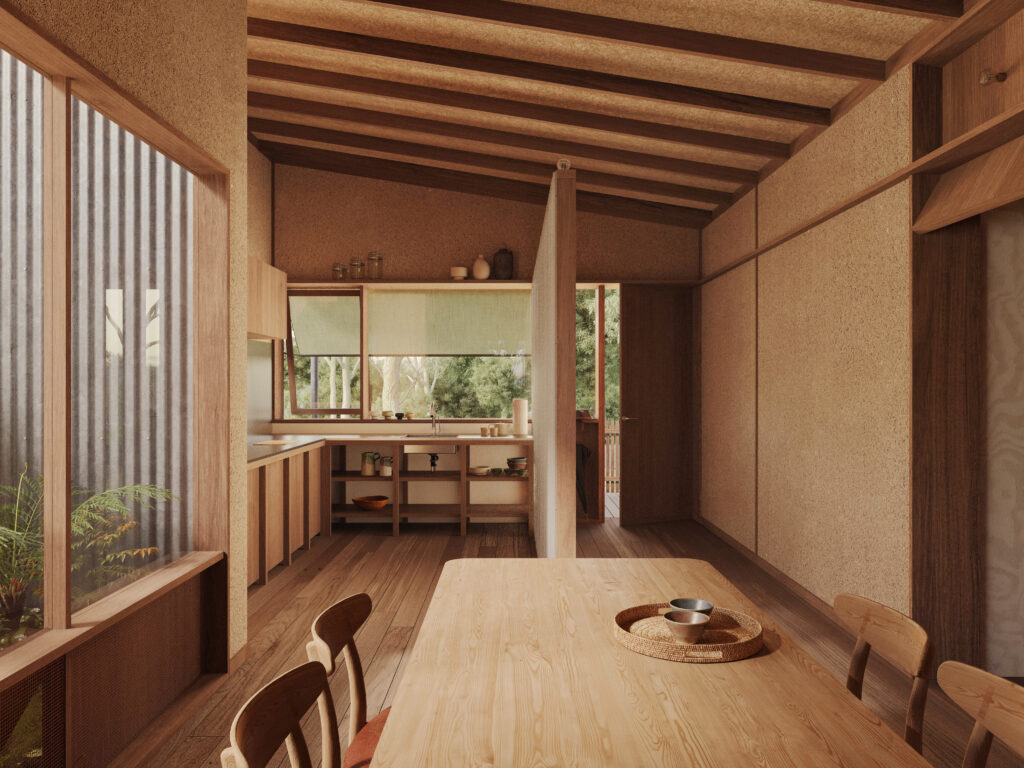
There’s a lot of work in the planning to eliminate wasted space – no unnecessary corridors, for example. We’ve worked to instead create rooms that are flexible and can adapt over time. The proportions are also really important. Bedrooms are more intimate, while living spaces open up and feel generous.
The aim is that when you look at the design, you don’t see compromise.
Flexibility is a key part of the design. How does Lomandra respond to changing lifestyles?
We’ve tried to embed flexibility into the DNA of the house. There are options for dual-key living, so part of the home can be used independently, whether that’s for extended family, a rental income, or a live-in carer.
There are also configurations that support ageing in place, like adaptable bedrooms, and the overall structure is modular, so it can respond to different sites including narrow blocks, irregular lots and different orientations.
Household structures are changing, and we think homes need to reflect that. They should be able to evolve with the people living in them.
The project also responds to a much bigger national challenge around housing emissions. Can you talk about that?
There’s a real paradox at the moment. We need to build more homes, but if we build them the way we always have, the embodied carbon will be enormous.
So rather than trying to completely change how Australians live, which is difficult in the short term, we’re asking how we can make the homes we’re already going to build much better. Lower carbon, more efficient, more thoughtful.
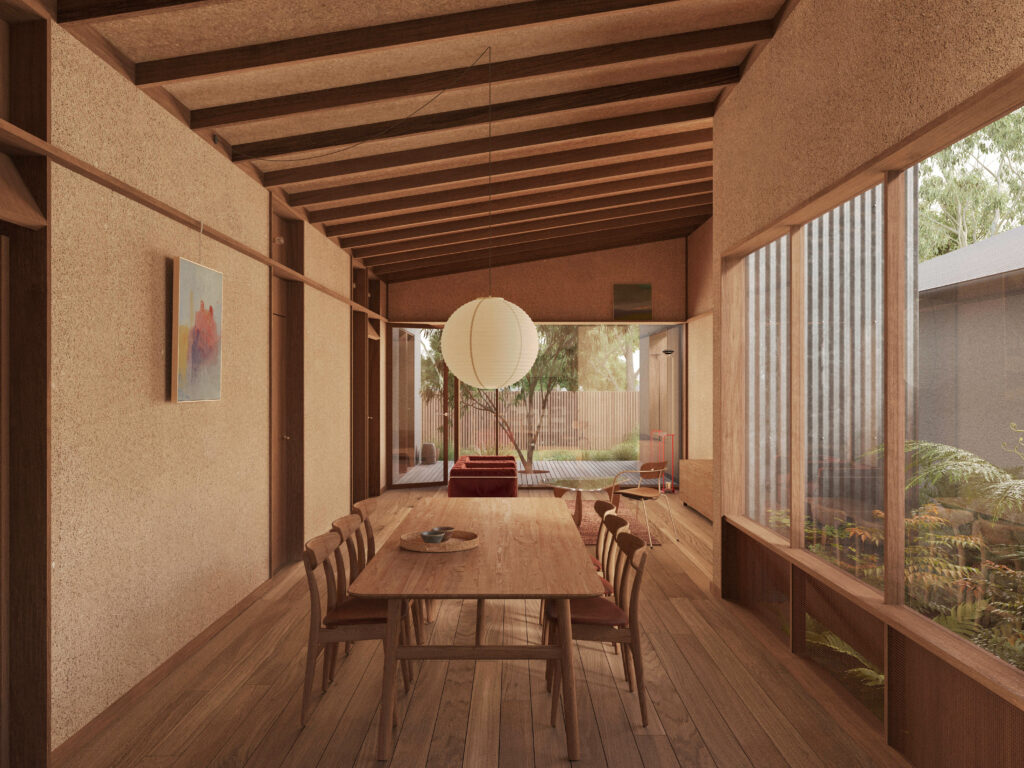
You’ve described prefab hemp housing as a “win-win”. What do you mean by that?
Sometimes with sustainable design there’s this perception that you have to give something up – that you’re doing the right thing for the planet, but maybe the experience isn’t as good.
What’s exciting here is that it’s the opposite. You get a home that’s beautiful, tactile, enjoyable to live in, and at the same time, it’s doing something positive environmentally. We sometimes talk about it as a kind of “eco-hedonism”. You’re not sacrificing quality of life, you’re enhancing it, while also contributing to a bigger solution.
What do you hope Lomandra represents for the future of housing?
There’s an opportunity here to create a new kind of housing language – something that’s rooted in material, performance, and in how homes are actually made. If this approach scales, you could imagine people looking back and recognising these homes as part of a broader shift – like how we think about terrace houses or art deco apartments today.
More immediately though, we hope it gives people a real alternative. Something that’s smaller, smarter and better for them and the planet.
Otetto
Otetto is the Australian pioneer of sustainable and liveable housing. Amanda Marsh brings a background in design, while Harrison Marsh, Chris Ball and Elliot Marsh bring expertise in high-end residential construction and architecture. Their shared concern about the environmental impact of traditional building methods led to the launch of Otetto, which stands for Of The Earth, To The Origin. The Otetto team has a desire to do things better, recognising the impact of materials and construction methods on a building, its inhabitants and most notably, the environment.
Other Architects
Other Architects is a different type of architectural practice, making decisions through conversation, designing in collaboration and guided by deep curiosity. Other Architects was an 2024 AD100 honouree, received the 2021 national Houses Award for Emerging Architecture Practice and the 2018 INDE Prodigy award for most promising design practice in the Asia-Pacific region, and is registered as a Design Excellence practice under the NSW Government Architect’s Prequalification Scheme.

Hempcrete is a natural, sustainable building material made from hemp hurd, lime, and water. It’s used to create breathable, highly insulated walls that store carbon, regulate ind...
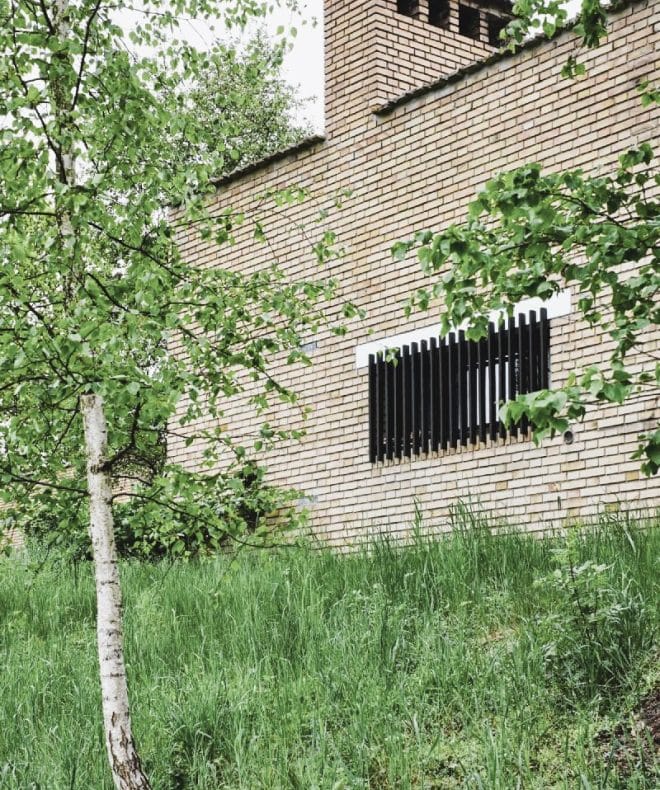
Welcome to Inspired Spaces, our new series celebrating thoughtful design—places and ideas that uplift, connect, and honour the environment. At Otetto, we see homes as more than s...
Hemp’s carbon-absorbing, high-performance properties are revolutionising construction. Discover how Otetto is harnessing this remarkable material to redefine building for a bette...